University of Tokyo's First Female President Sparks Controversy: Yuko Fujigaki Elected by Minority Vote; Debates Over Undemocratic Selection and Female Priority Intensify
🔥 Afraid of missing the latest open days, admissions information and application dates for primary and secondary schools across Hong Kong? Follow Goal-EDU.com now!
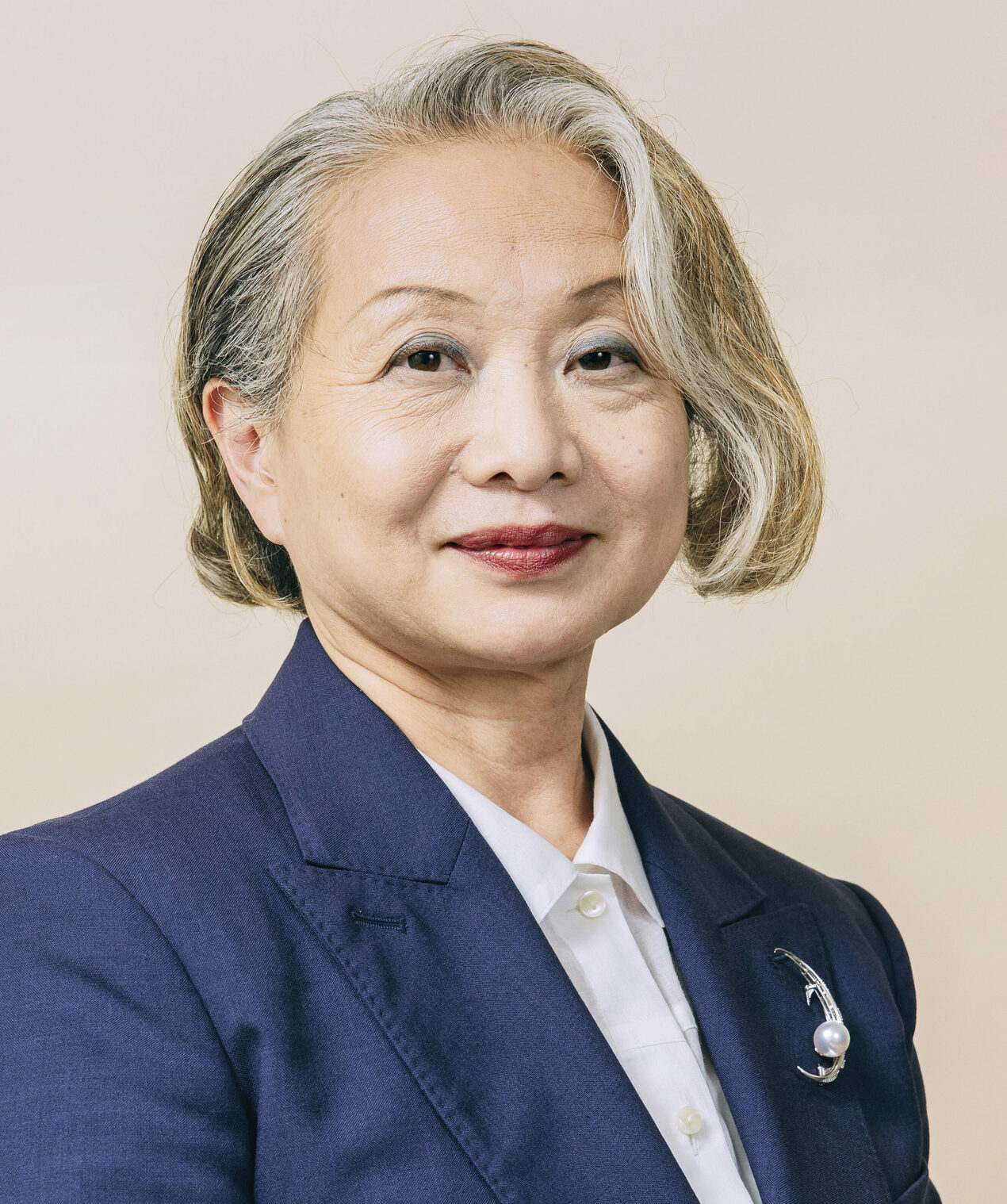
On 28 September 2026, the University of Tokyo selected Yuko Fujigaki as its next president. She will take office on 1 April 2027 for a six-year term, becoming the first female president in the university's 150-year history. Japan has long had precedents of female university presidents, such as Masako Niwa at Nara Women's University in 1997, Yukie Ikebata at Tokyo University of Foreign Studies in 2001, and Ikue Kina at the University of the Ryukyus in 2025. However, as Japan's top academic institution, UTokyo's first female president carries major symbolic significance while also sparking controversy over undemocratic selection and female priority.
⚖️ Elected by Minority Vote, Raising Questions Over Democratic Nature of Selection
Fujigaki, 64, is a professor at UTokyo's Graduate School of Arts and Sciences, focusing on science and technology studies and scientometrics. She is a UTokyo alumna and formerly served as an assistant in the College of Arts and Sciences. In 1996, she moved to the Science and Technology Policy Research Institute of the Japanese government's Science and Technology Agency as a senior researcher, returned to UTokyo as an associate professor in 2000, was promoted to professor in 2010, and has served as a UTokyo executive director and vice-president for five years since 2021, responsible for admissions articulation, student support, university evaluation and research ethics. Despite her experience, her election has sparked controversy because she was not the candidate with the most votes in the university's indicative ballot. Faculty and staff held two rounds of indicative voting on 28 September. In the first round, Professor Takao Someya of the Graduate School of Engineering received 818 votes (38%), while Fujigaki received 400 votes (18.6%); in the second round, Someya received 1,107 votes (51%) and Fujigaki 553 votes (25.5%). Fujigaki ranked second in both rounds, receiving less than half of Someya's votes. According to The University of Tokyo Newspaper, this is the first time since the establishment of UTokyo's presidential election system that a candidate who was not first in the indicative vote has been selected.
🗳️ Selection Meeting Holds Final Decision-Making Power; Procedure Not Violated
The internal indicative vote does not directly determine the final candidate. The body responsible for selection is the Presidential Selection and Monitoring Meeting, composed of 16 members—eight elected by the Administrative Council and eight by the Education and Research Council—including internal deans and external members from business and media. The chair, Yuko Kunitani, is currently an executive director of Tokyo University of the Arts and formerly long-time host of NHK's current affairs programme Close-Up Gendai. The meeting stated that it makes a comprehensive decision based on candidates' policy statements, interview performance and voting results, rather than considering vote counts alone, so Fujigaki's selection does not violate the selection procedure. However, critics question that even if the meeting holds final decision-making power, that does not mean it can avoid explaining the gap between the voting results and the final decision.
🔍 Restoring Academic Trust Becomes Key; Comparing Research Citations Lacks Fairness
There is indeed a real need to restore public trust in UTokyo. In November 2025 and January 2026, an associate professor and a professor at UTokyo Hospital were arrested on suspicion of bribery—the former for allegedly facilitating a manufacturer in medical device selection and accepting bribes, and the latter for allegedly accepting multiple high-value entertainment from partner organisations at high-end clubs. The UTokyo president publicly apologised, and the hospital director resigned. However, questions remain: one candidate had majority support in the vote, yet the meeting chose another—how much weight did different evaluation criteria carry, and how much meaning does the tradition of internal voting still have? Some inside and outside UTokyo also question that Fujigaki's research achievements are inferior to Someya's; for example, some on social media X claimed Someya's paper citations are about seventy times Fujigaki's. Someya is an engineering researcher in flexible electronics, whose representative work includes ultra-thin electronic devices that attach to the skin; he has won multiple academic awards and been repeatedly listed among Clarivate's "Highly Cited Researchers."
👩 Gender Not a Discussion Topic; "Female Priority" Doubts Not Dispelled
Some critics believe the selection was driven by political correctness, with UTokyo prioritising women. The meeting explained that candidates' gender was not a topic of their internal discussions, but did not directly respond to criticism that the selection process was undemocratic. The article points out that questioning the transparency of the selection does not equate to excluding female leaders; supporting women's entry into leadership and demanding that universities fully explain personnel decisions are not contradictory; and without evidence, the meeting's decision cannot simply be attributed to female priority.
📊 Women Make Up Only About 20% of UTokyo Students; Low Proportion of Women in Senior Roles
UTokyo's election of a female president is indeed of special significance, as the gender ratio among students remains clearly imbalanced. As of 1 May 2026, UTokyo had 14,098 undergraduates, of whom 3,023 were women, accounting for only about 21.4%. Nationwide in Japan, the university undergraduate enrolment rate for women has exceeded 50%, but the overall rate masks inequality across disciplines and educational stages. According to the Cabinet Office's Sixth Basic Plan for Gender Equality, in 2025 the university undergraduate enrolment rates for women and men were 56.5% and 60.7% respectively, a difference of 4.2 percentage points; the proportion progressing to graduate school after undergraduate studies was 6.9% for women and 16% for men. Differences in field distribution are also evident: the 2026 edition of the White Paper on Gender Equality shows that in the 2025 academic year, women accounted for 29.4% of Japanese science undergraduates and 17.9% of engineering undergraduates; at master's level, 24% and 15.9% respectively. After entering academia, in the 2025 academic year women accounted for 28.2% of full-time faculty at Japanese universities and graduate schools, but only 20.1% of presidents, vice-presidents and professors.
The political and business worlds are similar: although Sanae Takaichi became Japan's first female prime minister in October 2025, after the September 2026 cabinet reshuffle only three of the 19 members, including the prime minister, were women; as of February 2026, women accounted for 30% of House of Councillors members and only 14.6% of House of Representatives members; according to Ministry of Health, Labour and Welfare statistics, in 2025 among companies with 100 or more regular employees, women accounted for 16.1% of section manager-level positions and 9.3% of department manager-level positions; according to Teikoku Databank research, as of October 2025, only 8.6% of Japanese companies had a female president. Clearly, increased opportunities for Japanese women to receive higher education have not yet been fully translated into participation in leadership positions and decision-making levels.