Choi Yuk-lin: School "Merger and Upgrade" Scheme Will Be Selective; Merged Schools Must Have 4 Classes Per Level
🔥 Afraid of missing the latest open days, admissions information and application dates for primary and secondary schools across Hong Kong? Follow Goal-EDU.com now!
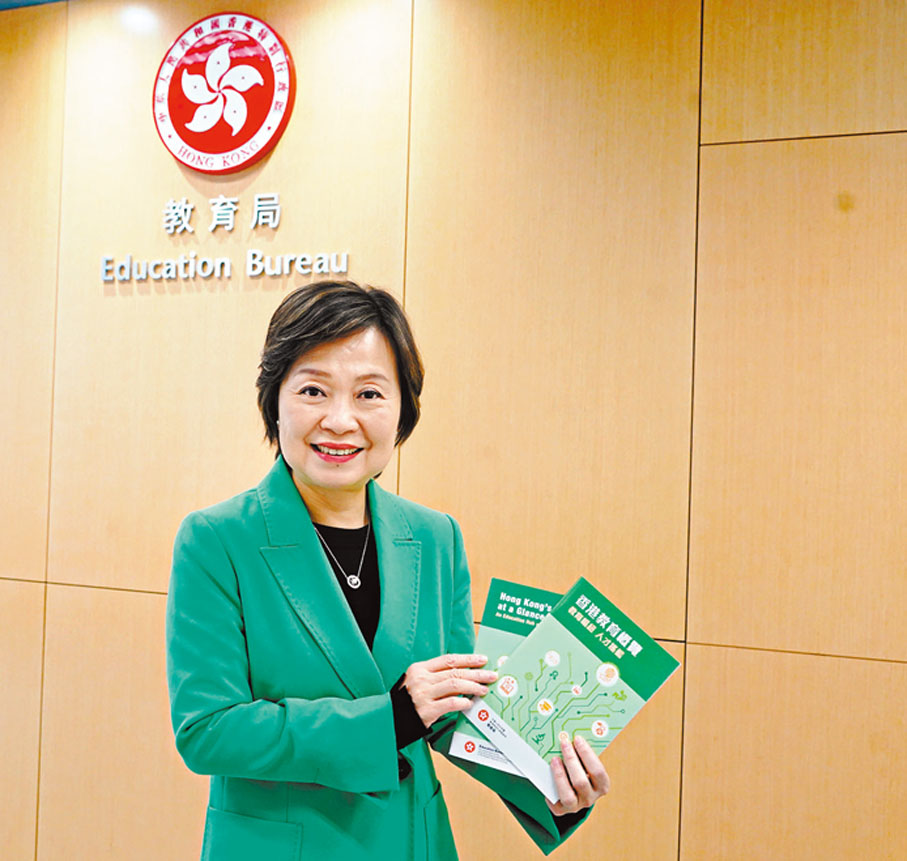
The new Policy Address proposes the "Convergence and Upgrade Scheme" to encourage the merger of aided primary and secondary schools. Secretary for Education Choi Yuk-lin said in a radio programme interview today (18th) that the Bureau is discussing the details with stakeholders and expects to announce them within this academic year, with implementation as early as the 2027/28 academic year. She said that although the scheme has a quota, there will be no upper limit on the number of participating primary and secondary schools, and applications will be "carefully selected," with the expectation that the merged scale will not be too small: "At the most basic level, it cannot go back to 'one plus zero' or 'one plus one.' We hope that after at least two schools merge, there will be four classes."
🎯 Scheme Not Launched Only When Enrolment Crisis Hits; Aims to Concentrate Resources for Quality Schools
Choi Yuk-lin said on RTHK's programme "Millennium" that, in the face of a structural decline in the school-age population, the "Convergence and Upgrade Scheme" is intended to transform and develop quality education. Under the scheme, the Education Bureau will "remove policy barriers," provide more flexible and convenient measures, and invest additional resources. She stressed that the scheme is not adopted only when schools face an enrolment crisis or are "allocated zero classes," but aims to concentrate resources to develop more distinctive and competitive quality schools. As for the allocation of places for primary and secondary schools, she said that since primary and secondary schools face population changes at different speeds, no preset quotas or priority order will be set.
🏛️ Government Schools Difficult to Merge Externally Due to Teacher System Issues; Aided and DSS Schools May Merge
Regarding school types, Choi Yuk-lin said that because government school teachers are civil servants, which involves systemic issues, government schools cannot merge with aided schools or Direct Subsidy Scheme (DSS) schools; however, mergers between DSS and aided schools are relatively less difficult to operate. It is understood that the scheme allows aided schools to merge with DSS schools to become a new DSS school. When asked about issues such as parents possibly having to bear tuition fees and teacher severance arrangements, she said that if a DSS school merges with an aided school, during the transition period, if students in individual year levels need tuition subsidies or adjustments, the sponsoring body can study the matter jointly with the Bureau, and the Bureau will provide full assistance within a reasonable, lawful and legitimate framework. As for calls to allow primary and secondary schools to merge into "through-train" schools, Choi Yuk-lin responded that Hong Kong has had a through-train policy in the past, and as long as the merger can enhance school quality and expand scale, the Bureau is open to various models.
🌏 Target of 100,000 Non-Local Students Covers Eight Universities and Self-Financing Institutions
The Policy Address proposes an indicative target of increasing the number of non-local students enrolled in locally accredited full-time post-secondary programmes to 100,000 by the 2029/30 academic year. Choi Yuk-lin said this figure covers undergraduate and master's students, as well as students at the eight universities and self-financing institutions. Compared with the current approximately 80,000 non-local students, the annual growth trend is close to expectations. She believes that with the space released by the development of the Northern Metropolis University Town, together with the gradual improvement of hostel places and various supporting measures, she is confident the target can be achieved. When asked whether the 50% cap on non-local students at the eight universities would be further relaxed before 2030, Choi Yuk-lin said the relaxation to 50% was only a measure of the past two years, institutions are gradually absorbing it, and there is still room under the current cap, so the situation will be closely monitored.
🏙️ Northern Metropolis University Town Response Enthusiastic; First Batch of 19 Hectares to Be Tendered Early Next Year
As for the Northern Metropolis University Town, a key focus of the Policy Address, Choi Yuk-lin said the development blueprint has been officially released, and expressions of interest have been received from many renowned local, Mainland and overseas post-secondary institutions, with an enthusiastic response. The authorities have decided to first release three sites totalling about 19 hectares in the Hung Shui Kiu/Ha Tsuen New Development Area as the first phase of development, with open tendering expected as early as early next year. The first batch of sites released will range from 4 to 8 hectares. When vetting applications, the authorities will focus on whether the education plan can promote the internationalisation of education and whether it aligns with the industrial layout of the Northern Metropolis. Choi Yuk-lin revealed that some overseas institutions have proposed establishing joint campuses or research centres, demonstrating the Northern Metropolis's attractiveness. In addition, the authorities encourage institutions moving in to adopt a "resource sharing" model, sharing facilities such as laboratories, libraries and hostels, to enhance land use efficiency and avoid campuses becoming "isolated islands."