Kwai Shing Lutheran School Includes Science in Scored Assessment: Moving Beyond Pen-and-Paper to Cultivate Scientific Literacy Through Diverse Experiences
 ELCHK KWAI SHING LUTHERAN PRI SCH3 Oct 2026
🔥 Afraid of missing the latest open days, admissions information and application dates for primary and secondary schools across Hong Kong? Follow Goal-EDU.com now!
Starting from the 2026/27 academic year, Science officially becomes a scored subject in Hong Kong primary schools. Christian & Missionary Alliance Kwai Shing Lutheran School fully embraces the Education Bureau's curriculum guidelines, rejecting the use of a single written examination as the sole measure of students' scientific ability. Through diversified learning experiences and a school-based assessment framework, students complete the scored assessment components of Science in the process of hands-on inquiry and first-hand experience. This dispels parents' concerns about assessment under the new subject and returns to the essence of learning science. With the Education Bureau splitting primary General Studies into Humanities and Science in the 2025/26 academic year, the school made thorough preparations in curriculum planning, hardware support and assessment models when preparing the Science curriculum—combining both software and hardware to welcome a new chapter with diverse experiences.
💬 Vice Principal: A Good Science Lesson Begins with a Question
Ms. Kong Hau-yin, Vice Principal of the school, said: "A good science lesson begins with a question and should, by the end of the lesson, spark even more questions in students. Learning science is not just about letting students do many experiments or carry out different activities; more importantly, it is about stimulating their interest and cultivating their scientific thinking, so that they can apply what they have learned in the future and lay a foundation for exploring curious things." To align with the Science curriculum and the needs of scored assessment, the school arranges rich "Scientific Inquiry" and "Engineering Design" learning activities for Primary 4 and Primary 5. Referring to the Education Bureau's Science guidelines, teachers use the PDAR steps ("Posing questions and planning, Implementing and recording, Analysing and organising, Reporting and reflecting") and the PDIR steps ("Defining problems and planning, Building models and testing, Improving designs, Reporting and reflecting") to drive learning activities, focusing on training students' scientific and engineering thinking and unleashing creativity and an inquiring spirit.
📊 Diversified Assessment Framework: Cultivating Scientific Literacy to Face Scoring with Ease
For the scientific inquiry ability assessment required for scoring, Science teachers designed rubrics for scientific inquiry and engineering thinking to objectively record and assess students' abilities in inquiry and engineering design activities, rather than relying solely on pen-and-paper tests. Students also use a "Learning Process Reflection Form" to review their own learning process, systematically strengthening core abilities such as inquiry, critical thinking and problem-solving. Beyond classroom inquiry activities, students build personal learning portfolios through diversified learning experiences such as outdoor fieldwork, drawing concept maps, information gathering and cross-subject practical work. Through "assessment as learning," students continuously review, reflect on and adjust their learning strategies in daily learning, without the need for extra drilling for tests. They complete the ability records related to scoring within a series of learning experiences, developing self-directed learning ability.
🚀 Non-Formal Curriculum Creates a Campus Science Atmosphere
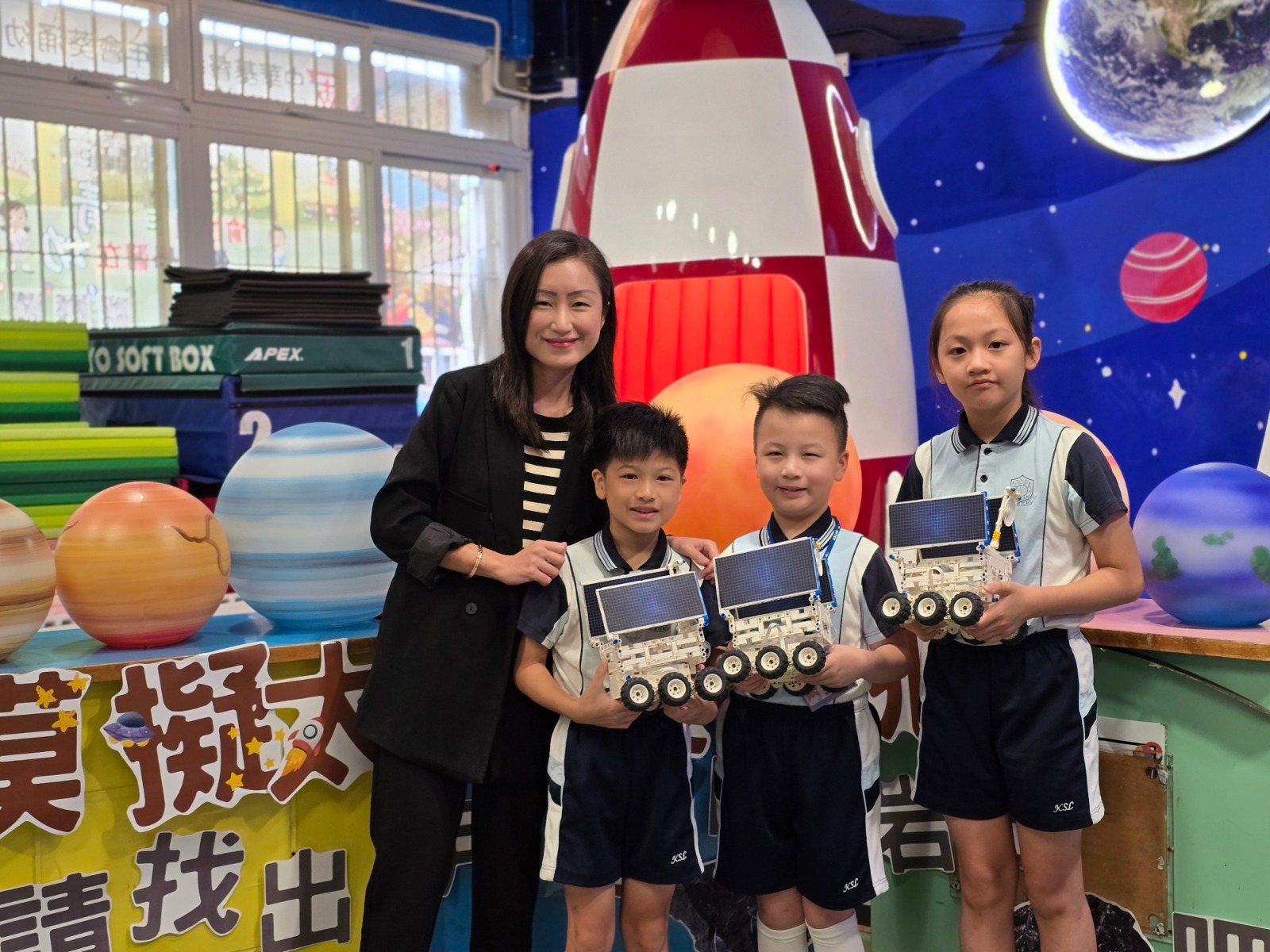
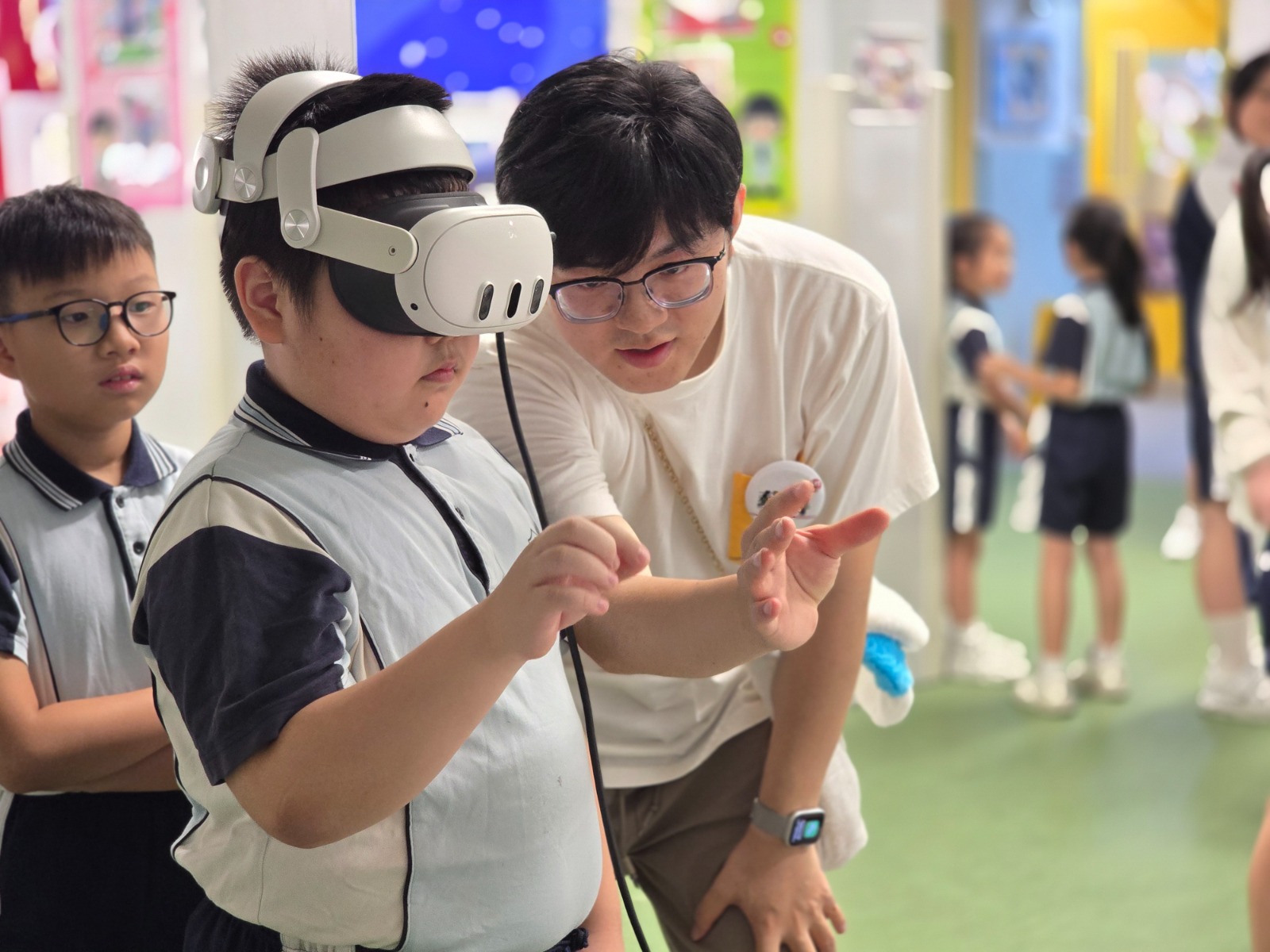
Beyond the classroom, the school broadens students' science experiences and consolidates scientific literacy through a variety of non-formal curriculum activities. The school holds a "Science and Aerospace Experience Day" with a wide range of activities, including science lectures, observation of endangered animals, VR space exploration, microscope exploration of Chinese medicine and plants, simulated spacewalks, controlling lunar rovers, chemistry experiments, science craft workshops and inter-class science quiz competitions, allowing students to step outside textbooks and personally experience the fun of science and aerospace technology. Regular science activities are also held during lunch breaks, with senior students serving as "Science Ambassadors" to plan and host lunchtime science mini-games, leading junior students to participate. The activities not only let senior students apply scientific knowledge in practice, but also let junior students encounter science in a relaxed environment, stimulating curiosity, while promoting cross-level interaction and enriching the campus science atmosphere. Teachers also lead students in producing in-school science programmes. In the process of conceiving and filming, students consolidate scientific knowledge and also enhance their expression and collaboration skills.
🏫 Dedicated Science Room Completed: Hardware Support Adds Lustre
To align with the development of the new Science subject and scored assessment, the school has built a dedicated science room, providing suitable space for teachers and students to conduct various hands-on experiments and supporting diverse learning modes. The science room has ample storage space, storing activity materials, learning tools and shared experimental supplies for each year level by category, making it convenient for teachers to prepare lessons and arrange classes. The school has also added a large number of science teaching aids, and set up a popular science reading area and a smart agriculture experimental area, where students can use cloud and AI technology for planting experiences; display cabinets showcase aerospace knowledge materials and plant and animal specimens, broadening students' horizons. Vice Principal Kong added that the science room uses electrically adjustable desks that can be raised or lowered according to the needs of senior and junior students, catering to different year levels' experimental needs.
💡 Returning to the True Meaning of Science Learning: Scoring Emphasises Process, Not Drilling for Tests
Facing the inclusion of Science in scoring, many parents inevitably feel anxious, worrying that their children will need to spend a lot of time memorising and drilling test questions. The school values the true meaning of science learning: cultivating children's curiosity, scientific thinking, observation and problem-solving abilities. Scored assessment does not aim to fail students, but to objectively record students' growth throughout their entire learning process. Through a diversified learning model that integrates classroom, activities and hardware, the school allows students to demonstrate scientific ability while participating relaxedly, complete scoring-related assessments, and truly enjoy the fun of exploring science.