Survey: Nearly Half of Children Aged 6–12 Have Myopia; Rate Reaches 70% in 11–12 Age Group; Experts Urge Regular Eye Checks
🔥 Afraid of missing the latest open days, admissions information and application dates for primary and secondary schools across Hong Kong? Follow Goal-EDU.com now!
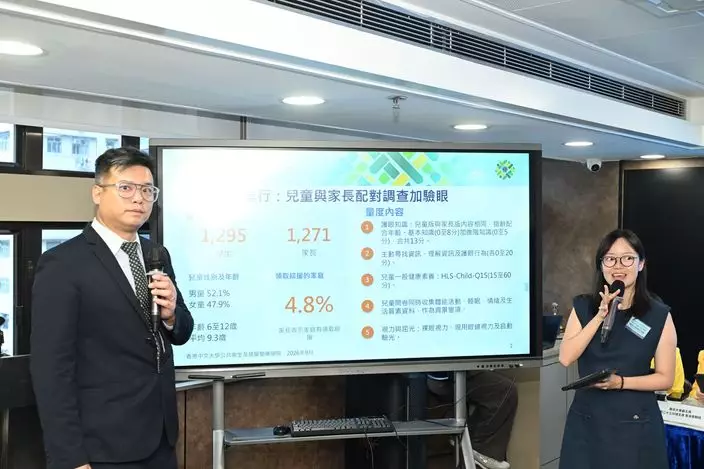
8 October was "World Sight Day." With digital education becoming increasingly prevalent, children's vision health issues have attracted considerable attention. The Chinese University of Hong Kong (CUHK), in collaboration with an organisation, conducted a vision survey targeting over a thousand children aged 6 to 12 across Hong Kong, finding that nearly half have myopia, with the rate in the 11–12 age group reaching as high as 70%. Experts noted that Hong Kong society generally holds the mistaken belief that "0.5 vision counts as a pass," which easily leads to early vision deterioration being overlooked. They recommend adopting 1.0 as the target for children's vision health and strengthening awareness of regular eye checks.
📊 Nearly 50% of Children Have Myopia, Rising with Age
The CUHK study, together with Lions Clubs International District 303 Hong Kong and Macao, covered 1,295 children aged 6 to 12 and 1,271 parents. Data showed that nearly 50% of children have myopia, with the rate at 35% in the 6–8 age group and over 70% in the 11–12 group, showing an upward trend with age. Chan Man-bun, President of the Hong Kong Optometric Association, explained that myopia is mostly caused by acquired factors. Prolonged near-distance reading and exposure to electronic screens are key factors, while sunlight can stimulate the brain to secrete dopamine and inhibit abnormal eye growth; insufficient outdoor activity time among children is also a major cause.
👓 30% Wear Glasses But Vision Still Below Standard
Although nearly 30% of children already wear glasses, 30% still have vision below 0.7, a proportion higher than the 21.7% among children who do not wear glasses—meaning "wearing glasses does not equal meeting the vision standard." Chan Man-bun stressed that eye examinations must consider multiple factors; for example, young age or poor condition during the examination may lower assessment standards. He observed that many parents have misunderstandings: once their child gets glasses, they stop following up, and some do not even know regular rechecks are needed. If the prescription deepens, they may even blame their child for "wasting money," increasing psychological pressure. Even if the examiner marks the report as "pass," parents should note the speed of word reading. He urged parents not to view vision checks simply as an industry sales pitch, recommending at least one eye check per year for children, and checks every 3 months for children over 11 whose myopia is worsening quickly.
💬 Experts Recommend 1.0 as the Vision Health Standard
Chan Ying, Research Assistant Professor at CUHK's Jockey Club School of Public Health and Primary Care, noted that general vision screening may use 0.5 as the threshold for mild visual impairment. She said 0.5 is only a screening standard under limited resources, and believes Hong Kong should tighten screening requirements, adopting 1.0 as the vision health standard.