JUPAS Applications Open Next Month: HKUST's Median Scores for 6 Subjects Rise by Over 7 Points
🔥 Afraid of missing the latest open days, admissions information and application dates for primary and secondary schools across Hong Kong? Follow Goal-EDU.com now!
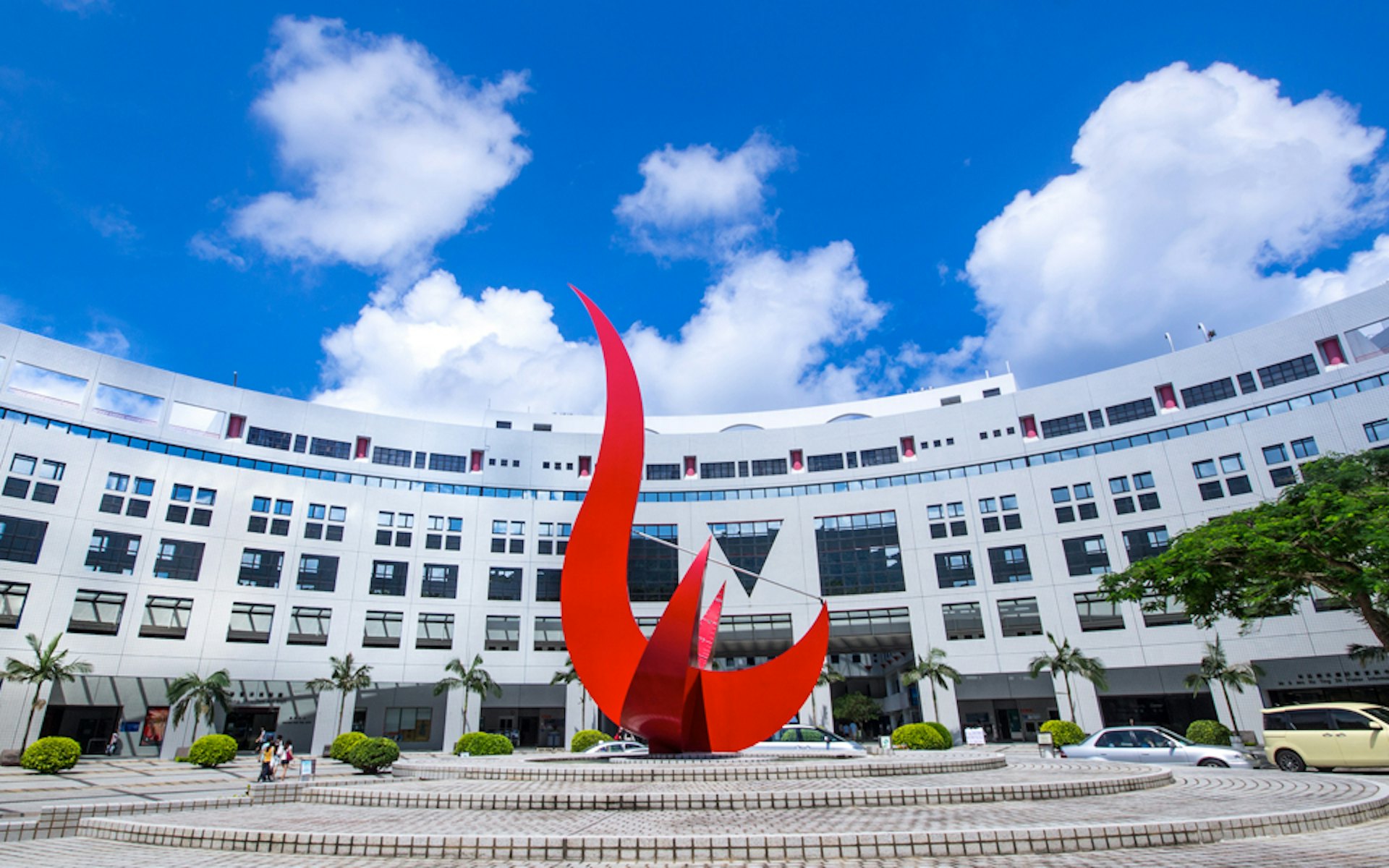
University Grants Committee-funded universities will begin accepting applications through the Joint University Programmes Admissions System (JUPAS) next month, and individual institutions have already uploaded admission score data for this academic year. At the Hong Kong University of Science and Technology (HKUST), as many as 6 subjects saw their median admission scores rise by over 7 points year-on-year. At the Hong Kong Polytechnic University (PolyU), the average HKDSE admission score for the BSc (Hons) Scheme in Applied Mathematics and Finance Analytics soared by 64 points, indicating increasingly intense competition for places. HKUST, PolyU and Hong Kong Metropolitan University (HKMU) have uploaded their JUPAS admission scores for the 2026/27 academic year. Comparing the data with the previous year, many subjects saw an overall increase in median admission scores.
📊 HKUST: Median Scores for 6 Subjects Rise by Over 7 Points
Department of Electronic and Computer Engineering: median 50.64 points (+8.9), lower quartile 48.88 points (+8.1);
Department of Industrial Engineering and Decision Analytics: median 45 points (+8.72), lower quartile 43.8 points (+8.7);
Department of Mechanical and Aerospace Engineering: median 49.53 points (+8.39), lower quartile 47.35 points (+7.63);
Department of Chemical and Biological Engineering: median 49 points (+7.51), lower quartile 48 points (+8.41);
Department of Computer Science and Engineering: median 55.65 points (+7.2), lower quartile 53.94 points (+7.49).
📈 PolyU: Average Scores for 13 Subjects Rise by Over 20 Points; Applied Mathematics and Finance Analytics Soars by 64 Points
BSc (Hons) Scheme in Applied Mathematics and Finance Analytics: average 264.7 points (+64), median 265 points (+71.5), lower quartile 245 points (+55.5);
BSc (Hons) Scheme in Computing and Mathematics: average 256.2 points (+35.8), median 247.5 points (+32.5), lower quartile 245 points (+35).
For the previously popular BSc (Hons) in Physiotherapy: average admission score 303.6 points (-25.7), lower quartile 290 points (-30);
BSc (Hons) in Speech Therapy: average 252.8 points (-14.2), median 259.8 points (-4.5), lower quartile 244.8 points (-15);
BSc (Hons) Scheme in Hotel and Tourism Management: average 163.5 points (-7.1), median 161 points (-5.5), lower quartile 157.5 points (-5.5). Admission scores for these subjects all fell significantly.
📉 HKMU: More Moderate Changes in Admission Scores
At HKMU, a university of applied sciences, changes in JUPAS admission scores were more moderate. For its "Bachelor of Education (Honours) in English Language Teaching and Bachelor of Arts (Honours) in English Studies" programme, both the median and lower quartile were 22 points, up by 2 and 3 points respectively year-on-year. For five subjects including the Bachelor of Business Administration (Honours) in Human Resource Management and the Bachelor of Science (Honours) in Construction Engineering and Management, median admission scores fell by 1 to 2 points compared with the previous year.
🤖 6 Universities Launch 8 New Subjects; 3 Directly Related to AI
In response to the wave of artificial intelligence (AI) development, 6 universities have launched 8 new subjects, 3 of which are directly related to AI. The Chinese University of Hong Kong (CUHK) and the University of Hong Kong (HKU) have respectively introduced Robotics and Bachelor of Engineering programmes to cultivate talent capable of building intelligent systems; City University of Hong Kong (CityU) has added a double degree programme in Bachelor of Laws and Bachelor of Science in Computer Science (Specialism: Artificial Intelligence), allowing students to combine technical and legal-ethical knowledge to explore legal and ethical challenges arising from AI. CUHK's Department of Mechanical and Automation Engineering has introduced a "Robotics" programme integrating mechanics, electronics, software and robotics knowledge, with specialised subjects such as "Foundations of Robot Learning" and "Embodied Intelligence." HKU's "Bachelor of Engineering (Robotic Engineering)" programme is co-organised by the Department of Mechanical Engineering, the Department of Electrical and Electronic Engineering, the Department of Data and Systems Engineering and the Department of Civil Engineering. Students will study in Shanghai in their third year, with the university providing a HK$50,000 scholarship covering return flights, nearby accommodation and a living allowance. CityU has added a "Bachelor of Laws and Bachelor of Science (Computer Science) (Specialism: Artificial Intelligence)" double degree programme, with an initial intake of only 8 places.