Elite Kindergarten Interview Guide | Secrets to Getting into St. Catherine's: K1 Interview Process Breakdown + Essential Preparation
 ST CATHERINE'S INTERNATIONAL KG21 Oct 2026
🔥 Afraid of missing the latest open days, admissions information and application dates for primary and secondary schools across Hong Kong? Follow Goal-EDU.com now!
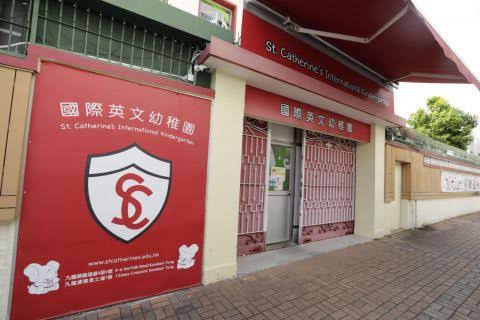
St. Catherine's International Kindergarten (St. Cat), a prestigious private school in Kowloon Tong, has long been the top choice that parents across Hong Kong compete fiercely for. The school is renowned for its excellent English and trilingual environment, and its graduates have exceptionally strong networks for progressing to local elite schools and international schools.
🏫 Established in the Elite School Net for Over 50 Years; Choice of Celebrity Parents
Founded over 50 years ago, St. Cat has stood in Kowloon Tong for many years. Most graduates successfully progress to traditional top elite schools such as Diocesan Girls' Junior School, Diocesan Boys' School Primary Division and St. Paul's Co-educational College Primary School, attracting local parents and celebrity families to enrol their children, including the children of Kelly Chen, Ada Choi, Myolie Wu and Ruco Chan. Admission interviews are expected to begin in early November. Regarding fees, referring to the 2025-2026 K1 annual tuition of HK$76,780, payable in 11 instalments. The school address is 4-6 Norfolk Road and 1 Essex Crescent, Kowloon Tong.
📅 Preparation Before the Interview: Rehearse at Home One or Two Weeks in Advance
One to two weeks before the interview, parents can begin mock practice with their children at home. It is advisable to prepare the child psychologically beforehand, telling them: "We're going to kindergarten to learn soon. At school, we need to listen to the teachers, and we'll learn more knowledge. School is a place to play, but this time we won't play yet—we'll go see the school together successfully, and then going to school there will be very happy!" The focus of home practice should be on basic manners and routines, such as greeting the teacher proactively with "Good morning," saying "Goodbye" when leaving, pushing the chair back when leaving the seat, and remembering to follow the teacher's instructions and absolutely not running around.
👕 Sleep Early the Night Before and Pay Attention to Dress
The child must get sufficient sleep the night before the interview to maintain the best mental state. As for the dress code that worries parents most, Smart Casual is fine for children. The one accompanying parent should dress neatly, cleanly and smartly, which is how most parents were dressed on the day.
🎮 Breaking Down the Interview Process: Free Play Can Be a Scoring Moment
On the interview day, after registration, parents and children will first wait in batches in a classroom, then be taken to a free-play classroom. Different tables in the room will provide books, toys or drawing tools. A special reminder: teachers will be observing nearby during this segment, which can be a scoring moment at any time! After playing, children should remember to tidy up, push their chairs back, and proactively greet and say goodbye to the teacher, demonstrating good manners.
📝 Individual Meeting Segment: Parents Must Write Parenting Insights on the Spot
After the free-play activity, they will move to another classroom where a teacher will meet the parent and child individually. During this, a form will be distributed asking parents to fill it in on the spot, mainly about parenting insights and parenting questions. Parents should not be too nervous, otherwise they may appear unnatural or even say the wrong thing when answering. In daily life, parents should use positive methods to care for their children and encourage and praise their good behaviour—teachers greatly appreciate this kind of positive parenting.
🗣️ Must-See Common Interview Questions
While parents fill in the form, the teacher will ask the child questions directly nearby. Common interview questions include: What is your name? Where do you live? Identifying simple colours and animals; number and sequence questions. The questions will not be too difficult; the most important thing is that the child is willing to open their mouth and answer the teacher. If applying for the "English and Putonghua Class," another Putonghua teacher will be arranged to meet the child, testing their reactions and comprehension through instructions. For example, the teacher will ask: "Can you give me the apple?" and "What colour is this apple?" to observe whether the child can follow along. The entire interview process is actually relaxed and happy; the most nervous are often the parents. A message to all fathers and mothers: don't be too nervous, because being too nervous will make answering questions unnatural or even lead to saying the wrong thing.
📚 Three Major Curriculum Features
St. Cat's curriculum design is comprehensive, mainly covering three features.
First, creating a quality biliterate and trilingual learning environment. As a local kindergarten that hired native English teachers early on, each class is co-led by Chinese and foreign teachers. Its self-developed Phonics programme, with over half a century of history, is highly acclaimed and is reviewed and revised every year.
Second, rich and diverse life experiences, combining nature classrooms, community visits and hot social topics to design interactive courses.
Third, providing comprehensive Primary One transition training. The school has dedicated Primary One transition and mock interview training to help children adapt in advance to the interview requirements of mainstream elite schools.
🔍 No Portfolio Required for Interview; Principal Personally Breaks Down 5 Key Observation Areas
In the past, after completing the online application process, the school would first observe children's performance through a few-minute life video submitted by parents, and then arrange in-person meetings after selection. Parents do not need to submit a portfolio; the school mainly observes children's performance on the interview day. Principal Wong Shuk-hang previously revealed that the in-person interview is divided into two parts: the first round lets children participate in group activities, and the second part is an individual meeting with the teacher accompanied by the father or mother, during which the teacher will ask questions and play games, or ask about basic knowledge related to daily needs. Principal Wong stressed that the school does not specify a certain type of student to admit, and parents need not be overly nervous. During activities and meetings, the school will focus on observing children's manners, answering performance, overall development, communication and interaction with parents, and whether parents agree with the school's educational philosophy and value respect for teachers.