St. Joseph's Anglo-Chinese School Suddenly Imposes "Seat Restriction Order": Only 3 Students Allowed to Use Toilet Per 5-Minute Break; Education Bureau Says It Has Contacted the School
 ST JOSEPH'S ANGLO-CHINESE SCHOOL3 Oct 2026
🔥 Afraid of missing the latest open days, admissions information and application dates for primary and secondary schools across Hong Kong? Follow Goal-EDU.com now!
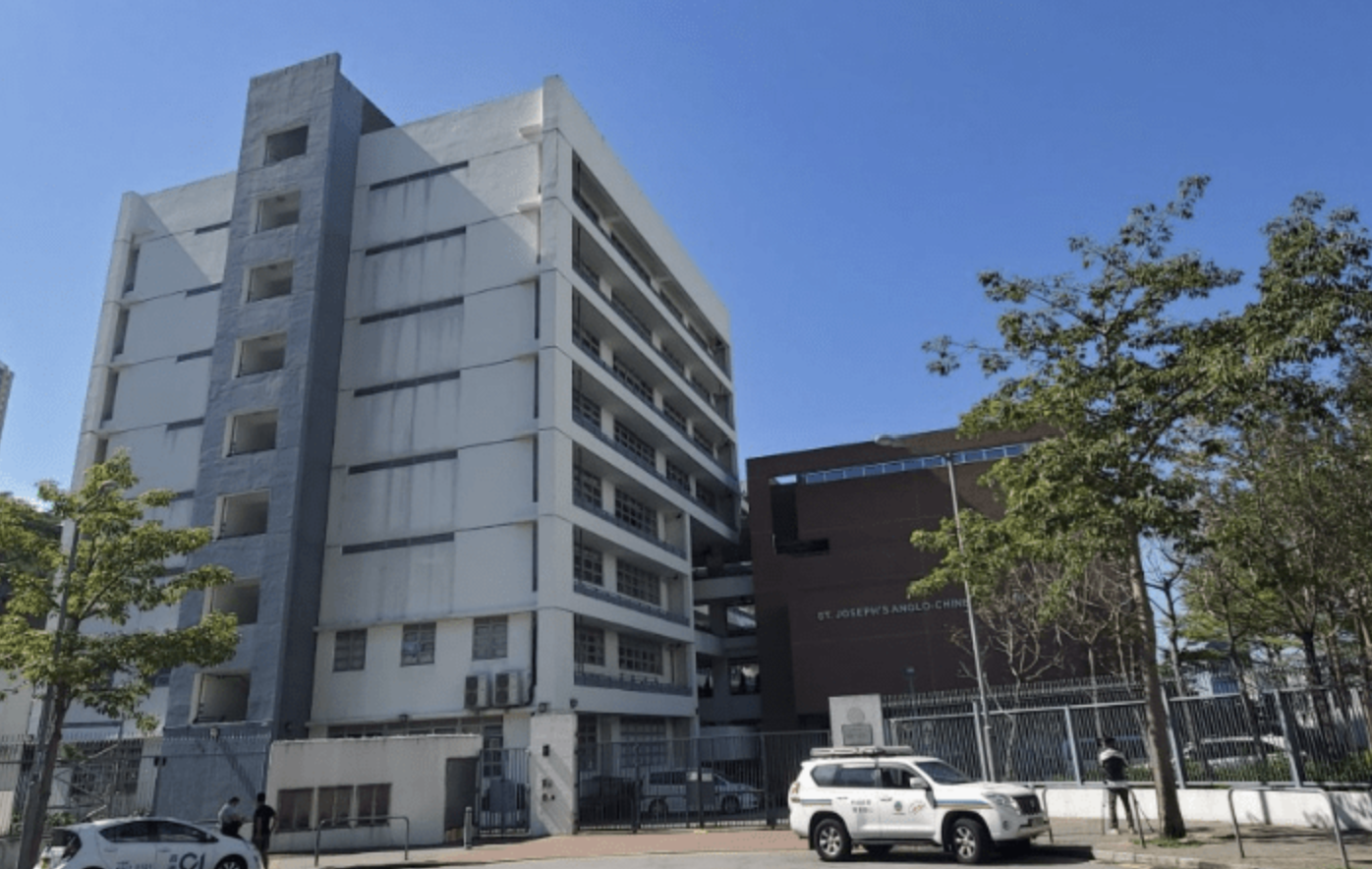
St. Joseph's Anglo-Chinese School has recently become embroiled in a break-time controversy. On 29 September, the school suddenly issued a "red-headed document" to the whole school, implementing a very strict new "5-minute break" policy. The notice stipulated that students must "remain in their seats" during breaks, and that going to the toilet required "applying" to the class monitor, with only 3 students allowed at a time. A cumulative violation penalty mechanism was also set up, with some angrily criticising the measures as like "serving a prison sentence," and the method of governing secondary students as reverting to the primary and kindergarten era.
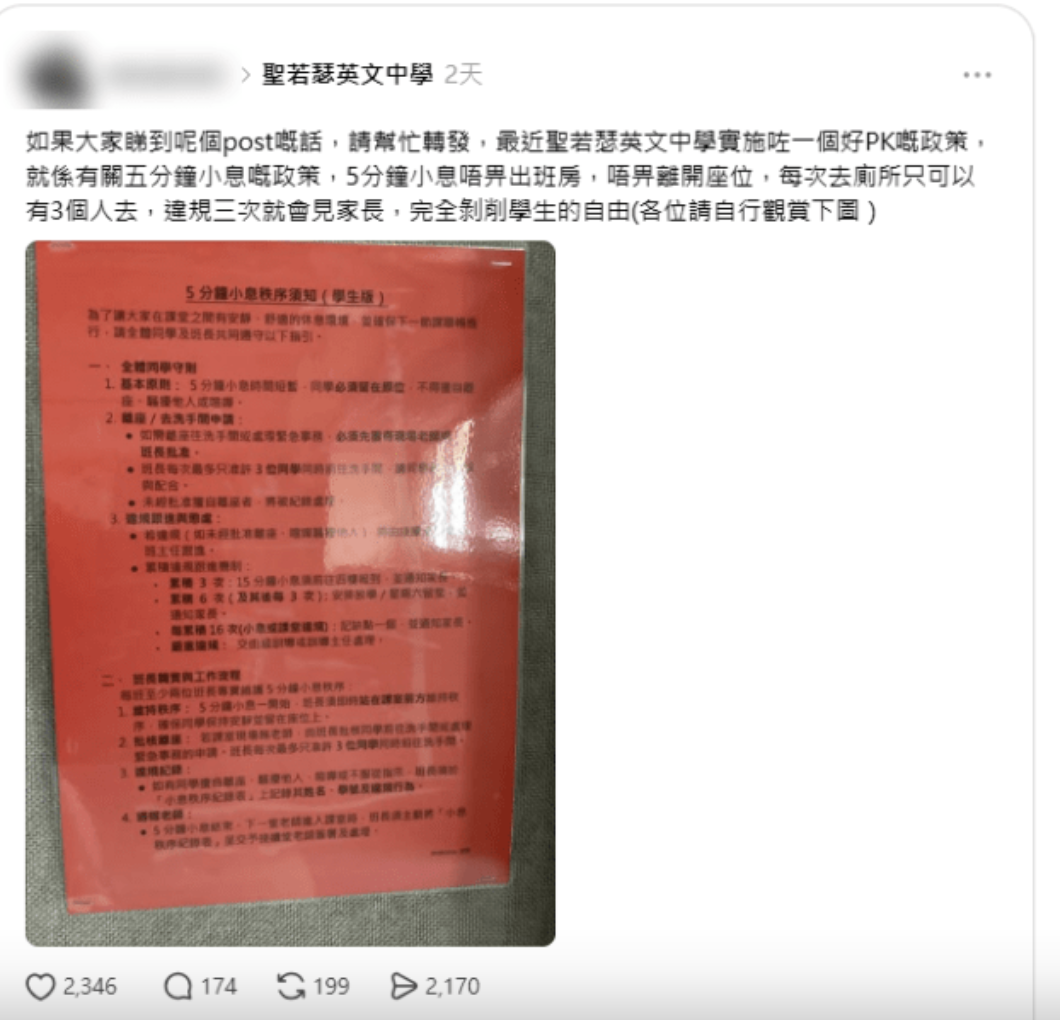
📋 Only 3 Allowed to Toilet During Break; 3 Violations Means Meeting Parents
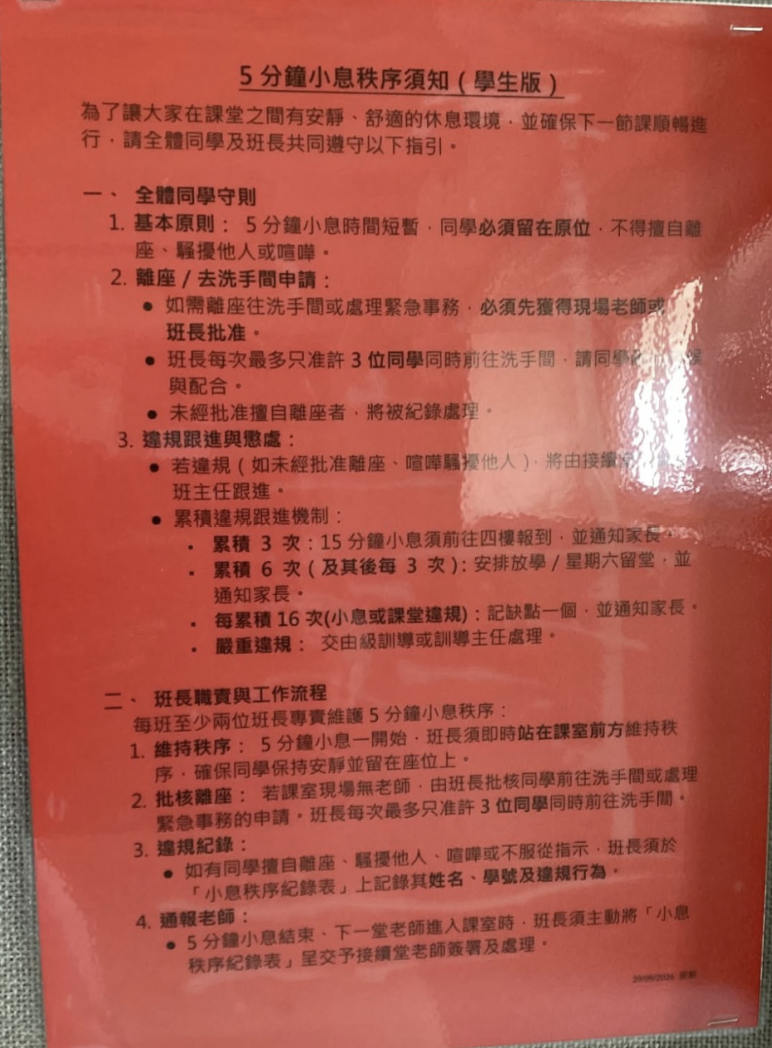
According to a post uploaded by a student to social media, which included a "5-Minute Break Order Guidelines" notice, the school cited "ensuring the smooth running of the next lesson" as the reason, stating that all students must remain in their seats and not leave their seats without permission, disturb others, or make noise; if they need to use the toilet or deal with urgent matters, they must first obtain approval from the teacher on duty or the class monitor, and the class monitor may allow at most 3 students to go at the same time. Those who leave their seats without permission will be recorded. The notice also set up a "cumulative violation follow-up mechanism": 3 violations require reporting to the fourth floor and notifying parents; accumulating 6 violations (and every 3 thereafter) requires detention after school or on Saturday; every 16 accumulated violations results in one demerit. At the same time, class monitors are given great power, required to approve classmates' requests to leave their seats when no teacher is present, and to record the names and student numbers of violating students on the "Break Order Record Form," submitting it to the teacher for signature and handling in the next lesson.
😤 Students Dissatisfied: "Completely Deprives Toilet Freedom"
The posting student commented that out of ten lessons in a full day, apart from the lunch period from 12:05 to 1:20, there is only one 15-minute break (9:25–9:40) and two 5-minute breaks (10:50–10:55, 14:30–14:35). Students have always been able to freely leave and enter the classroom during breaks. The stricter governance measures are suspected to have been taken because of a Form 2 student pushing and shoving, and the student criticised the approach as like "cutting off one's toes to avoid the sandfly."
💬 Netizens Mock: "Thought I Was Back in Kindergarten"
The school's new policy instantly sparked heated discussion on the social platform Threads. One posting student said bluntly that it "completely deprives toilet freedom," and netizens reacted enthusiastically, leaving comments mocking: "Secondary school still doing this kind of thing, are they really going to manage it so strictly?", "Huh, kindergarten?", "How exactly do you decide which three students can go to the toilet? Fastest to raise hand? See who wets themselves first? Draw lots? Or whoever is friends with the class monitor?", "Isn't break supposed to be for resting? With so many rules it's not very restful." Netizens generally believe that secondary students are mature enough to arrange what to do during breaks, and should not be controlled by top-down governance, otherwise it will only backfire.
📞 Education Bureau: Has Reminded Schools to Consider Students' Practical Needs
The Education Bureau responded that after learning of the incident, it immediately contacted the school to understand and follow up on the situation. Formulating and enforcing school rules is part of a school's daily operation and school-based affairs, generally handled professionally by the school according to its circumstances. The Education Bureau has reminded schools that when enforcing school rules, they should take into account students' practical needs, make appropriate school-based arrangements, and maintain effective communication with stakeholders. The Education Bureau will continue to maintain contact with the school concerned and provide appropriate advice and support.