UK's "Miracle Anti-Crying Song" Played 470 Million Times in 10 Years: Babies Go Quiet Instantly; Japan's Takashi Sorimachi Also Has One
🔥 Afraid of missing the latest open days, admissions information and application dates for primary and secondary schools across Hong Kong? Follow Goal-EDU.com now!
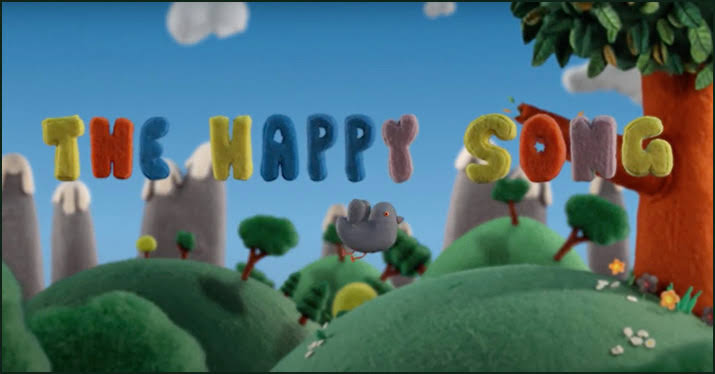
Many new parents have encountered their baby suddenly crying in the car, on a plane, or before bedtime, and holding, feeding, or playing with toys may not always work. A British song dubbed the "miracle anti-crying song" by parents, The Happy Song, recently marked its 10th anniversary. It has now accumulated over 470 million streams on Spotify, becoming a must-have parenting playlist for many families. The official music video has about 150 million views on YouTube, and a 10-hour loop version made by a netizen has 14 million views.
🧠 Musicians and Psychologists Create a "Happy Song"
The Happy Song is no ordinary children's song. In 2016, British infant food brand Cow & Gate invited music psychologist Lauren Stewart and child development psychologist Caspar Addyman to collaborate, hoping to create a song that makes babies feel happy and is free for parents to use. The two then brought in Grammy-winning musician Imogen Heap to participate in the creation; at the time, she also had an 18-month-old daughter. The research team first interviewed over 2,000 parents to understand which sounds most easily attract infants' attention, and incorporated elements such as animal sounds and children's laughter into the song. Heap is a member of the British duo Frou Frou and also participated in the production of Taylor Swift's 1989 album. She joked that she never imagined she could make big money from babies around the world: "I just wanted to write a song so that a family stuck in traffic could have a few minutes of respite." Today, the song has become one of her highest royalty-earning works.
👶 26 Babies Tested to Select the Most Popular Melody
To find the melody that most arouses infants' interest, Heap specially created 4 different main melodies, paired with two tempo versions, and invited 26 babies aged between 6 and 12 months for testing. Researchers analysed infants' facial expressions, movements and vocal reactions, combined with parents' opinions, and ultimately found that about 80% of babies preferred the same melody, which was used to complete the final version. The team originally thought babies with faster heartbeats would prefer very fast rhythms, but the test results showed that babies actually preferred the relatively slower version, overturning some of the researchers' expectations.
🎯 Three Design Highlights: Distract Attention First, Then Soothe
Experts pointed out that The Happy Song employs many elements specially designed for infants and young children, including major-key composition, a highly repetitive melodic structure, drum rolls and gradually rising pitch. The beat draws babies' attention away from the cause of crying, allowing emotions to settle first, before moving on to holding or bedtime relaxation. In addition, the song extensively uses the "motherese" singing style commonly heard when adults communicate with infants—that is, more exaggerated intonation, clearer pronunciation and a strong sense of rhythm. The lyrics also include syllables such as "pa" and "ba" that babies can more easily imitate, increasing participation and familiarity.
💬 Even Parents Are Catered For; In-Flight Test Shows Immediate Effect
Imogen Heap revealed that when creating the song, besides considering babies' reactions, she also hoped the song would not irritate parents who need to play it repeatedly. Therefore, in addition to fun sound effects, the song includes lyrics expressing parent-child affection such as "I love you more every day," hoping parents would also resonate when listening. She even shared a personal experience, saying she once encountered a baby crying continuously for over an hour on a flight. After she suggested the parent play The Happy Song, the baby immediately quietened upon hearing the opening laughter, with emotions clearly improving. "That dad almost cried," Heap said. "He was so grateful—finally he could take a breath."
🇯🇵 Japan's Version of the Anti-Crying Song: Takashi Sorimachi's "POISON"
Besides The Happy Song, another famous "anti-crying song" circulates in Japan. Japanese actor Takashi Sorimachi's 1998 classic song "POISON" has long had an urban legend that "babies stop crying as soon as they hear it." Japanese media later conducted tests, inviting infants from Japan, the UK, New Zealand, the US and Brazil to participate, and found that many crying children quickly stopped after the song played, with some even smiling. Japanese acoustics researcher Hajime Suzuki analysed that the intro of "POISON" has very obvious pitch fluctuations and rhythmic variation, which can create novelty and stimulation for infants, thereby quickly distracting them; the chorus section is relatively steady, helping to relax emotions, thus potentially producing a soothing effect. Sorimachi himself also expressed surprise after watching the video, joking that he wished he had known this when his daughter was little.
⚠️ Parents Should Note: Music Is Not a Panacea
Experts remind that although many parents find The Happy Song and "POISON" effective, they do not necessarily work for all infants and young children. If a child continues to cry, parents should first check whether it is due to hunger, discomfort from a wet nappy, excessive fatigue, illness or physical discomfort. Music is better used as a tool to help distract attention and stabilise emotions, combined with holding, gentle patting and creating a comfortable environment to achieve better soothing effects.